Illustrative sample
Operational Risk Dashboard
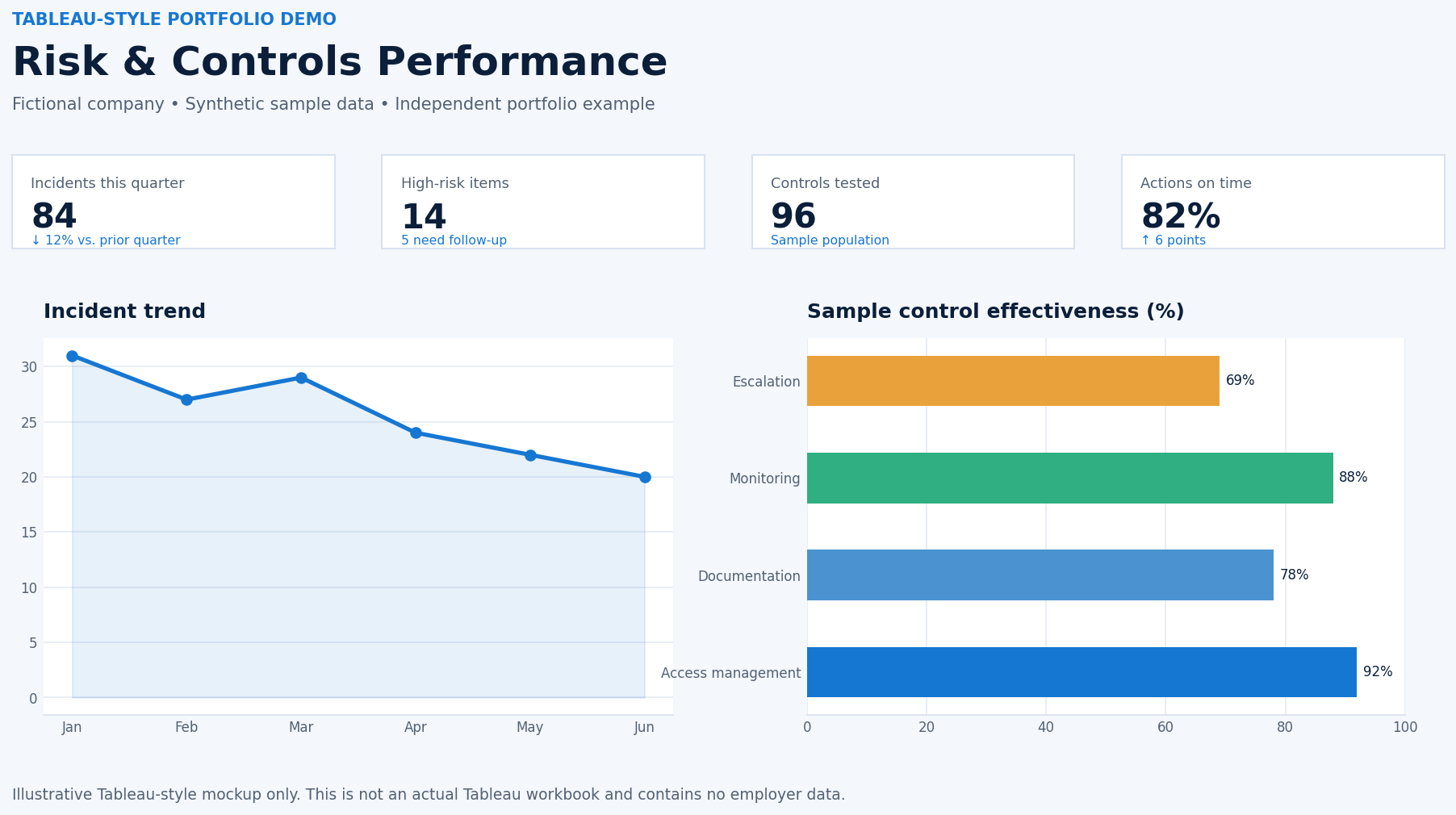
A fictional dashboard exploring incident volume, risk ratings, action status, and monthly trends to show how metrics can support prioritization.
I'm Jaisell Morales, a financial services professional with experience across operational and credit risk, governance, compliance, client operations, and analytics. My work connects risk assessment, control analysis, regulatory considerations, issue remediation, management reporting, and process improvement. I’m especially interested in using data and responsible AI-assisted workflows to organize complex information, identify questions that need attention, and help teams make better-informed decisions.
Independent demonstrations of risk analysis, reporting, compliance thinking, and process improvement. Example figures and scenarios are fictional.
A fictional dashboard exploring incident volume, risk ratings, action status, and monthly trends to show how metrics can support prioritization.
Explore a synthetic risk dataset, compare reporting periods, identify notable patterns, and translate observations into practical recommendations using spreadsheet and visualization techniques. SQL exploration may be added as skills develop.
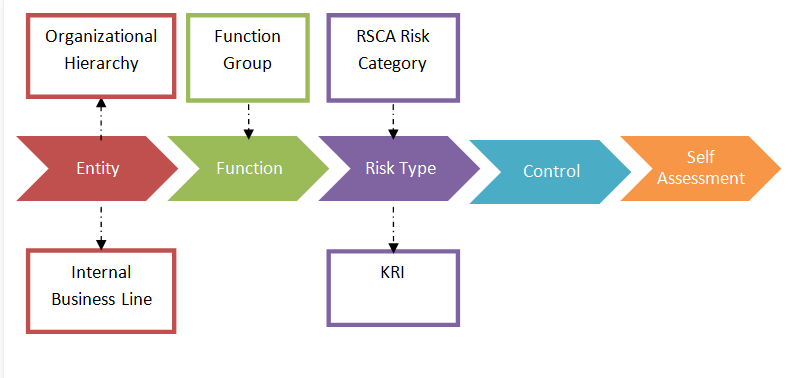
A sample RCSA for a fictional company, including risk statements, inherent risk, controls, gaps, and remediation actions. The diagram illustrates how organizational structure, functions, risk categories, controls, and self-assessment can connect.
An independently built prototype using fictional rules and process descriptions to organize requirements and flag review questions for human validation.
Map a fictional workflow, identify bottlenecks, and propose measurable improvements to cycle time, documentation, and control consistency.
A mock report turning sample findings into an executive summary, key exposures, recommended actions, ownership, and follow-up measures.
My focus is on making complex risk and compliance information clear, useful, and actionable.

I bring approximately eight years of financial services experience spanning client operations, credit operational risk, governance and controls, and compliance-focused process analysis. My work has included risk and control assessments, monitoring risk appetite metrics and fraud-loss limits, tracking issues and remediation, supporting RCSA activities, reviewing process documentation, and preparing clear reporting for risk stakeholders and leadership forums.
I approach risk as both an analytical and operational discipline. I look at how a process works end to end, how teams and systems depend on one another, whether controls address the relevant exposure, how issues are prioritized, and what evidence is needed to validate a conclusion. I value practical recommendations, clear ownership, thoughtful escalation, and follow-through rather than reporting findings without a path forward.
My technology experience includes Tableau reporting and dashboards, SAS, Jira, and SAI360/eGRC, along with exposure to SQL and AI-assisted analysis. I’m particularly interested in responsible AI applications for compliance research, process mapping, requirement organization, dependency analysis, and repeatable review workflows. AI can help structure information and surface questions, while decisions and conclusions still require human review and validation.
My areas of interest include operational and business risk, credit risk, regulatory compliance, governance, control effectiveness, consumer protection, risk analytics, AI governance, responsible automation, process optimization, and executive reporting. I enjoy work that brings these disciplines together to make complex requirements easier to understand and act on.
This portfolio is a collection of independent demonstrations, not a representation of my former employers’ systems or work products. To protect confidentiality, all sample scenarios, names, process descriptions, records, and numerical data are fictional or synthetic. No confidential information, customer data, internal documents, proprietary workflows, or restricted employer materials are included. Examples are illustrative only and should not be interpreted as actual employer results, regulatory advice, or production-ready controls.
A practical overview of laws, industry guidance, and frameworks connected to consumer credit, credit reporting, risk governance, financial controls, and information security. This section distinguishes regulatory requirements from industry standards and risk-management practices.
My focus is on understanding how requirements relate to processes, controls, documentation, escalation, and evidence. The list represents relevant work and knowledge areas, not a claim of certification or implementation ownership for every item.
FCRA · Regulation V · Regulation B (ECOA) · Regulation Z (TILA) · UDAAP
These topics relate to consumer reporting, credit-related obligations, fair lending and nondiscrimination, lending disclosures, and practices that may create consumer harm. In a compliance review, relevant questions can include whether requirements are reflected in procedures, whether controls operate as intended, and whether exceptions are documented and resolved.
Metro 2® reporting standards · Credit Reporting Resource Guide (CRRG)
These industry resources support consistent credit reporting. Review areas may include data fields and codes, reporting accuracy, dispute-related processes, correction workflows, and the documentation needed to investigate potential reporting issues.
SOX · ISO/IEC 27001 · RCSA · Three Lines Model · KRI and risk appetite monitoring
These areas connect control design and assessment with governance, monitoring, accountability, information protection, and follow-up. Relevant practices include identifying control gaps, tracking remediation owners and dates, monitoring indicators against thresholds, and communicating risk themes clearly.
These topics reflect relevant experience and knowledge areas, not a claim of certification or responsibility for implementing every framework. Metro 2 and CRRG are industry guidance, not laws or regulations.
Tools used to support research, analysis, workflow design, and productivity. Outputs are reviewed by a person and are not treated as a substitute for professional judgment.
Research support, structured analysis, drafting, and organizing complex information.
Document analysis, writing support, and organizing information into clear summaries.
Can assist with reviewing longer text, extracting themes, structuring comparisons, and refining professional writing. Findings should be checked against the original source before use.
AI-assisted coding and help understanding or improving code.
Can help explain code, suggest implementation approaches, and support troubleshooting. Generated code should be reviewed and tested before it is used.
AI-assisted process and dependency analysis to help map requirements and identify review questions.
Relevant to organizing knowledge across workspaces, connecting related information, identifying dependencies, and preparing follow-up questions for subject-matter review. Conclusions still require validation by process owners and compliance experts.
My work has combined detailed analysis with collaboration across business and risk stakeholders. These experiences shape how I approach evidence, control effectiveness, clear documentation, and practical recommendations.
Conducted risk assessments, monitored risk appetite metrics and fraud loss limits, analyzed emerging themes, and supported reporting for risk leadership and committees.
This work calls for tracking indicators against defined thresholds, identifying patterns that may warrant attention, explaining changes in risk exposure, and preparing concise information that helps stakeholders prioritize follow-up.
Supported RCSA activities, risk acceptance and issue tracking, control analysis, eGRC processes, dashboards, and remediation follow-up.
My approach emphasizes clear risk statements, traceable rationale, documented ownership, appropriate review periods, evidence of control performance, and visibility into whether remediation actions are completed and effective.
Reviewed regulatory requirements and process documentation, used AI-assisted analysis, and partnered with subject matter experts to validate findings.
I look at how requirements connect to actual process steps, systems, dependencies, controls, and potential consumer impact. Structured analysis can help surface gaps and questions, while final interpretation and decisions remain with accountable reviewers.
A combination of risk management knowledge, analytical tools, and process-focused problem solving.
I'm always open to connecting with teams looking for someone who can bring together risk management, compliance, analytics, and process improvement. If you're hiring for operational risk, business risk, governance, compliance, or risk analytics, I'd welcome a conversation.
I'm also interested in collaborating on practical analytics and automation ideas that make risk information clearer and help teams make informed decisions.